

Before choosing a patio layout, decide how you want to use the space, where water moves now, and how people will get between the house and yard. A walk after rain can add useful observations to the conversation. Seasonal rainfall is context, not a promise that a particular work date will be dry.
Decision 1: Name the patio's main job
Will the patio be a place to sit near the back door, a spot for meals, or a link to a walkway? Picture where chairs or a table would go, how people would move, and which route should stay clear. Walk a rough outline and check it from the places you expect to use it.
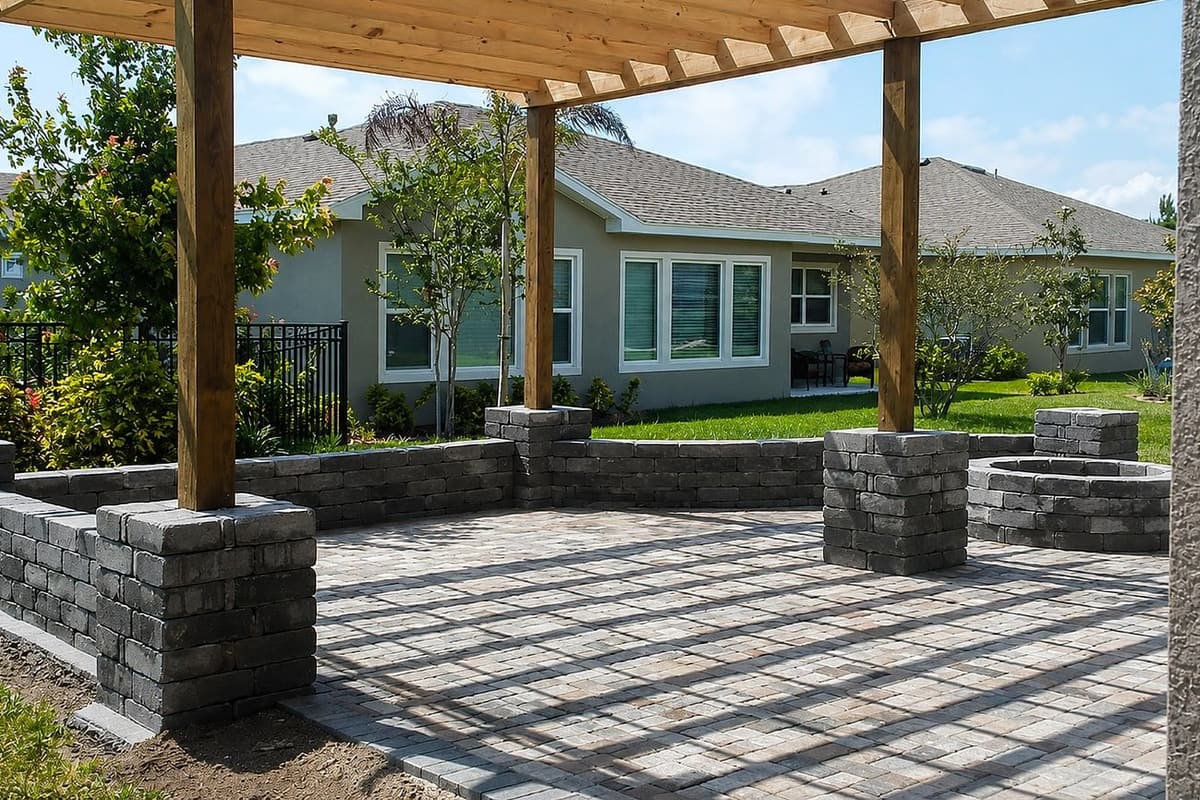
The Hardscaping services include patios and walkways planned around gathering, foot traffic, access, and nearby features.
Decision 2: Follow the water that is already there
After rain, note where water gathers, how it crosses the lawn, whether it leaves a channel, and where roof runoff exits. Take photos from a few consistent spots. You do not need to diagnose the cause; the observations help make the site discussion specific.
UF/IFAS recommends considering existing drainage patterns in its sustainable home landscape guidance. It also identifies pervious paving as one material option that can reduce the visual and ecological impact of large paved areas. That general guidance does not establish which surface or drainage plan fits a particular patio.
Decision 3: Ask how the proposed surface will handle rain
The word “paver” alone does not tell you how water will move through or around a finished area. Ask whether the proposed system is intended to let water pass through or direct runoff across the surface. Ask where water is expected to go at the patio edges and how the plan relates to nearby low spots, downspouts, lawn, and beds.
The service page describes paver installation for agreed patio or walkway areas, with an on-site assessment of space, slope, drainage, access, and nearby features. Confirm the material and scope during that property review. Do not assume a pervious system is offered or suitable unless confirmed for the job.
Decision 4: Keep timing flexible
NOAA's monthly climate normals for Gainesville Regional Airport list a September precipitation normal of 5.05 inches and an average of 11 days with at least 0.01 inch of precipitation. Those figures describe a station's long-term climate, not a forecast for a specific property or a prediction for a particular September.
Use recent site observations when discussing timing. Ask which parts of the work depend on weather or site conditions and how a change in timing would be handled. A flexible conversation is more useful than assuming a month will be dry.
Build a short project brief
You do not need a finished plan. Bring notes on:
- The patio's main use and who will use it.
- The route between the patio, house, yard, and any walkway.
- The rough area you are considering and features that need access.
- Where water pools or flows after rain, including roof runoff and low areas.
- Questions about the proposed paving system and where runoff will go.
- Any timing flexibility and weather-related questions.
For a patio or walkway project in High Springs or another area Premier serves, contact the team to discuss the property and the scope you have in mind.