

A useful lighting plan starts with the places you want to see after dark, not a fixture list. At dusk, note the routes, viewpoints, and outdoor features that matter. Record any damp areas you observe after rain or irrigation. Leave electrical suitability and product selection to the service professional.
Stop 1: Trace the route from arrival to entry
Walk from the driveway or front walk to the door. Mark turns, steps, gates, and surface changes, and notice where existing porch lights already cover part of the route. This helps describe the view you want without promising that a particular lighting layout will solve every visibility concern.
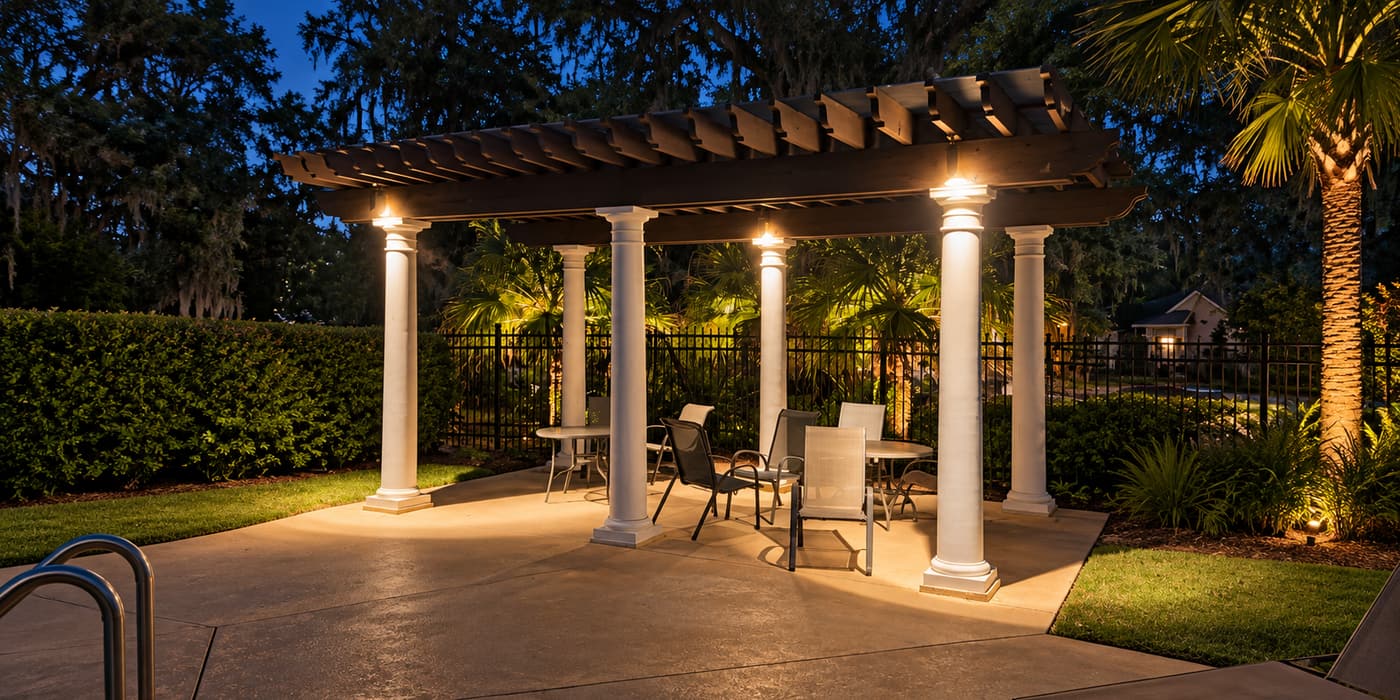
The U.S. Department of Energy's pedestrian-focused outdoor-lighting report discusses pedestrian views, visibility, and glare. Its examples come from specific demonstration sites, so use the report as context for questions rather than as a residential design specification.
Stop 2: Check the view from more than one place
Look at the route while walking it, then pause at the entry, a seating area, and a nearby window. A light source that seems unobtrusive from the street may look direct from a chair or shine toward a window. Mark those viewpoints and explain what you notice.
The Department of Energy summarizes the Five Principles for Responsible Outdoor Lighting from the Illuminating Engineering Society and the International Dark-Sky Association. They encourage directing light where needed, using only the amount needed, using controls so it is on only when needed, and selecting color temperature thoughtfully. Treat these as planning prompts, not a guarantee about a fixture or outcome.
Stop 3: Pick a few features to notice
Identify the plants, trees, structures, or paths you want to see instead of lighting every feature equally. The Landscape Design & Install page describes lighting planned around paths, plants, structures, and other features a homeowner wants to highlight.
Stop 4: Note damp areas without diagnosing them
Walk the area when dry and, if practical, after rain or irrigation. Record standing water, sprinkler spray, and damp paving or planting areas. The DOE report illustrates reflected glare from pavement and notes that grass beside the pictured path has a more matte reflectance when wet. It is not a guide to fixture wet-location ratings or electrical installation.
Share those observations with the installer and ask how the proposed placement and equipment will fit the actual surface, nearby planting, irrigation patterns, and views from the home. Do not use a general article to decide whether a specific fixture or connection is suitable for a damp or wet location.
Keep routine yard work in mind
Note where shrubs are pruned, beds are mulched, lawns are mowed, or irrigation is used. Mention those activities when discussing placement so the proposed layout can be considered alongside the way you use and maintain the area. This is a planning conversation, not a do-it-yourself wiring checklist.
Bring a short walk-through brief
A phone photo or sketch can show the entry, routes, beds, trees, current lights, windows, and areas that become wet. Add three notes:
- Which route you want to see clearly.
- Which few features you want to notice after dark.
- Where a light might be visible from a seat, window, or neighboring part of the property.
Lighting is available for new projects and existing landscapes, according to the Landscape Design & Install service page. For an entry, path, or planting area, contact Premier Lawn Care to discuss the property. You do not need a fixture list to start that conversation.